
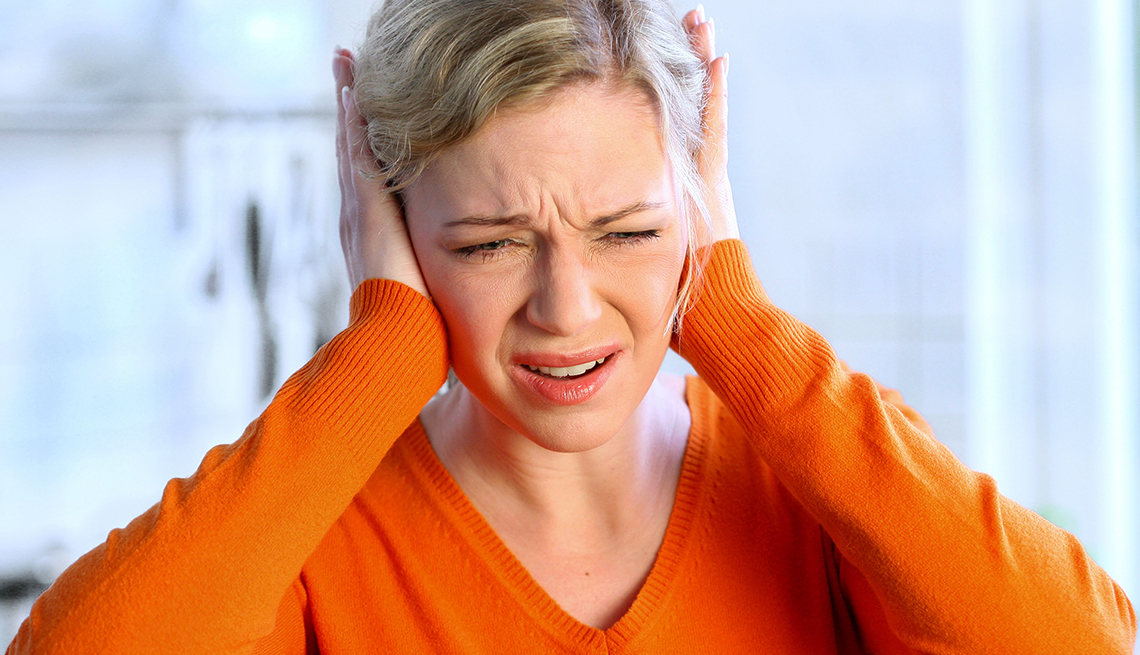
A hearing test for adults evaluates how well you detect sounds and understand speech. It helps identify hearing loss, determine its possible cause, and guide treatment such as hearing aids or medical care.
Hearing ability often declines gradually with age or prolonged exposure to noise, so many adults do not notice changes until communication becomes difficult. These hearing problems influence social interaction, work performance, and mental well-being. Difficulty hearing conversations may lead to frustration, withdrawal from social situations, and increased listening fatigue.
Early testing provides objective information about hearing health and supports timely management. Audiologists and hearing specialists conduct these assessments using standardized equipment in a controlled environment. The results appear on an audiogram, a graph that shows the quietest sounds a person can hear across different frequencies and volumes. This information helps determine whether hearing falls within the normal range or shows mild, moderate, severe, or profound loss.
What Are the Common Types of Hearing Test for Adults?
Audiologists often use several tests during a single appointment. Each test examines a different part of the hearing system, from the outer ear to the inner ear and the brain’s processing of sound. Together, these evaluations provide a comprehensive picture of hearing health.
Pure-Tone Audiometry
Pure-tone audiometry is the most widely used hearing test for adults, also known as air-conduction testing. It measures the quietest sounds a person can hear at different pitches or frequencies.
Here’s what typically happens during the test:
- The patient wears headphones in a quiet or soundproof room.
- An audiologist plays tones at varying volumes.
- The patient signals whenever they hear a sound, usually by pressing a button or raising a hand.
The results create an audiogram that displays hearing thresholds across a range of frequencies. Clinicians will analyze the audiogram to determine the degree and pattern of hearing loss, which helps differentiate between conductive hearing loss, sensorineural loss, or a combination of both.
Pure-tone testing serves as the foundation for most adult hearing evaluations because it provides precise data about hearing sensitivity. In a Canadian Longitudinal Study on Aging examining how hearing loss relates to cognitive performance, results showed that hearing loss, measured by pure-tone thresholds, had a weak but consistent association with cognitive functions.
Speech Testing (Speech Audiometry)
Speech audiometry evaluates how well a person hears and understands spoken words. Unlike pure-tone testing, which uses simple tones, speech testing focuses on real-world communication.
During the test:
- The patient listens to recorded or spoken words through headphones and repeats what they hear.
- The audiologist measures two key factors:
- Speech reception threshold – identifies the softest level at which speech can be understood
- Word recognition ability – measures how accurately someone can repeat words presented at a comfortable volume
Speech testing provides practical insight into how hearing loss affects communication in everyday situations. Even if someone hears tones reasonably well, they may struggle to distinguish speech clearly, especially in noisy environments.
Tympanometry
Tympanometry assesses the function of the middle ear rather than hearing ability itself. The test examines how well the eardrum moves in response to changes in air pressure.
The procedure goes like this:
- The audiologist places a small probe in the ear canal.
- The device changes air pressure and measures how the eardrum responds.
- The results appear as a tympanogram, which helps detect problems such as fluid in the middle ear, eardrum stiffness, or dysfunction of the Eustachian tube.
Middle ear issues can cause conductive hearing loss, so tympanometry may help clinicians determine whether hearing difficulties originate in the middle ear rather than the inner ear.
Bone Conduction Test
The bone conduction test checks how the sound travels through the bones of the skull directly to the inner ear. Instead of headphones, the audiologist places a small vibrating device behind the ear on the mastoid bone.
The device sends vibrations that bypass the outer and middle ear, delivering sound directly to the cochlea. This method helps determine whether hearing loss originates in the outer or middle ear or in the inner ear itself.
Audiologists can distinguish between conductive and sensorineural hearing loss by comparing bone conduction results with standard air-conduction tests.
Otoacoustic Emissions (OAE)
Otoacoustic emissions testing evaluates the function of the inner ear, particularly the outer hair cells within the cochlea. These cells produce very faint sounds when stimulated by external tones.
This is how the test is being carried out:
- A small probe placed in the ear canal emits gentle clicking sounds.
- The probe records the tiny sound waves produced by the cochlea in response.
- If these emissions are present, it usually indicates that the inner ear is functioning normally.
OAE testing requires little active participation from the patient and is quick and painless. Clinicians often use it to detect early inner ear damage or confirm findings from other hearing tests.
What to Expect During a Professional Evaluation
A professional hearing evaluation usually lasts between 30 minutes and one hour. Here’s how the process usually begins:
- A brief discussion about symptoms, medical history, noise exposure, and any difficulties with hearing or communication.
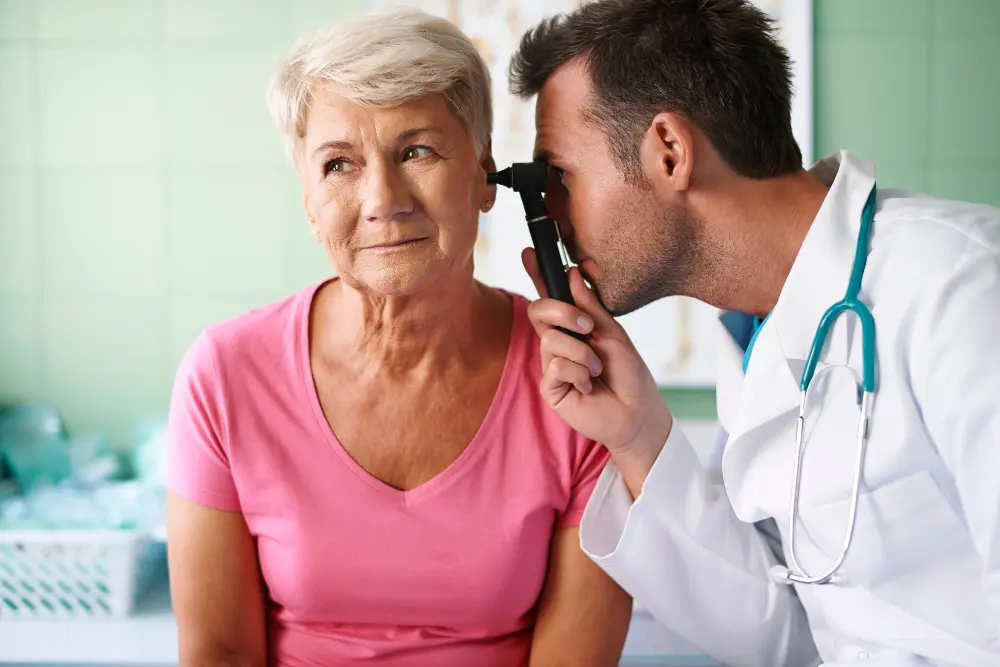
- Ears examination using an otoscope to check for blockages, infection, or visible abnormalities.
- After this inspection, the clinician conducts a series of hearing tests, such as those mentioned above.
During the tests, patients sit in a quiet booth and wear headphones or small probes in the ears. Once testing finishes, the audiologist reviews the audiogram and explains the results. If hearing loss is present, the clinician may recommend further evaluation, hearing aids, or medical treatment depending on the cause and severity.
When to Get a Test
Adults should consider scheduling a hearing test if they notice changes in their hearing or communication abilities. One indicator is difficulty following conversations, especially in group settings or noisy environments. Frequently asking others to repeat themselves or increasing television volume can also signal hearing changes.
Exposure to loud noise is another reason to seek testing. People who work in noisy environments or frequently attend loud events may experience gradual hearing damage over time. Regular screening helps detect early changes before they worsen.
Age also plays a role. Age-related hearing loss, known as presbycusis, becomes more common as people grow older. Many health professionals recommend baseline hearing tests for adults in midlife, followed by periodic monitoring.
Sudden hearing changes, ringing in the ears, dizziness, or ear discomfort require prompt evaluation by a hearing specialist or medical professional.
Conclusion
A hearing test for adults provides essential insight into hearing health and communication ability. Through professional assessments, your local audiologist can evaluate how the ear and auditory system respond to sound.
These tests are straightforward and highly informative. They help detect hearing loss early, identify its cause, and guide appropriate treatment. For many adults, regular hearing evaluations support better communication, improved quality of life, and long-term auditory health.